Plan Your Bathroom Remodel With Clarity
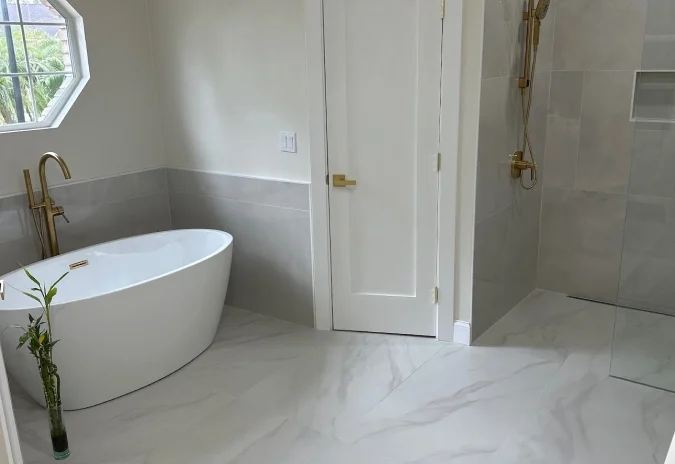
Walk-In Shower vs. Tub Conversion: What They Actually Cost
Breaking Down Installation and Material Costs
Material and labor expenses form the foundation of any bathroom remodeling decision. Prefabricated shower bases reduce costs, while custom tile installations using porcelain or natural stone increase the investment.
Demolition of the old tub, pan installation, surround material, and new fixtures comprise the bulk of the expense. However, homeowners in Green Cove Springs often encounter hidden costs when aging pipes or water damage require repair during demolition. Florida’s humidity accelerates mold growth behind tub surrounds, particularly in homes built before updated building codes addressed moisture barriers.
The final price depends on finish quality and scope. Understanding these cost layers helps you set realistic budgets and avoid mid-project surprises.
Timeline and Disruption Considerations
Project duration affects daily routines and overall convenience. Complex layouts with custom tile patterns, niche shelving, or extensive waterproofing extend timelines. In Florida’s humid climate, proper curing time for mortar and grout becomes essential. Rushing these steps invites long-term moisture infiltration and tile failure.
The existing drain location and plumbing connections streamline the process. However, unexpected discoveries during demolition can delay both project types. Rotted subfloors, outdated galvanized pipes, or improperly vented plumbing require immediate correction.
Homes in the Green Cove Springs area built during the 1980s and 1990s frequently present these challenges. Clay soil conditions contribute to foundation settling that can crack tile or shift drain connections over time. Coordinating fixture delivery, tile selection, and inspector availability also influences timelines. Proper planning minimizes disruption and ensures quality results rather than rushed workmanship.
Feature Comparison: Function and Accessibility
Functional features directly impact daily use and long-term satisfaction. Walk-in showers offer barrier-free entry, eliminating the high step required by traditional tubs. This design benefits aging-in-place homeowners and families with mobility concerns. Built-in benches, handheld showerheads, and slip-resistant flooring enhance safety without compromising style. Larger floor plans accommodate dual showerheads or steam features that transform daily routines into spa experiences.
Tub-to-shower conversions prioritize practicality. They reclaim floor space in smaller bathrooms, making the room feel more open and modern. Low-profile pans with minimal thresholds improve accessibility while maintaining traditional shower boundaries. However, removing a tub eliminates bathing options for young children or homeowners who prefer soaking. This trade-off matters in family homes or properties targeting resale buyers who value versatility.
Florida homeowners also consider ventilation and moisture management. Walk-in showers with larger glass enclosures require robust exhaust fans to prevent condensation buildup. Inadequate ventilation accelerates mildew growth and damages surrounding drywall. Feature selection should balance immediate needs with long-term maintenance realities.
Durability and Ongoing Maintenance Requirements
Long-term performance depends on material selection and installation quality. Walk-in showers using porcelain tile and epoxy grout resist staining and moisture penetration for decades. Glass enclosures require weekly squeegee maintenance to prevent hard water deposits, common in areas with mineral-heavy groundwater like Green Cove Springs. Frameless glass systems minimize metal components that corrode in humid environments, reducing long-term replacement costs.
Tub-to-shower conversions using acrylic or fiberglass surrounds require less daily maintenance but may discolor or crack over time. These materials expand and contract with temperature changes, and Florida’s heat accelerates degradation. Seams around prefabricated panels become vulnerable points where water infiltrates if caulking fails. Annual re-sealing prevents expensive water damage to framing and subfloors.
Custom tile installations demand more initial investment but offer superior durability. Properly installed tile with waterproof membranes outlasts prefabricated systems by 15 to 20 years. However, grout lines require periodic resealing to maintain moisture barriers. Homes near the St. Johns River or Clay County wetlands face higher humidity levels that accelerate wear on any bathroom surface. Quality substrate preparation forms the foundation of lasting installations. Choosing materials suited to local conditions and committing to routine care maximizes your investment regardless of which option you select.
Making the Right Choice for Your Home and Budget
Long-term performance depends on material selection and installation quality. Walk-in showers using porcelain tile and epoxy grout resist staining and moisture penetration for decades. Glass enclosures require weekly squeegee maintenance to prevent hard water deposits, which accumulate rapidly in Green Cove Springs due to mineral-rich municipal water sources. Silicone caulk joints need inspection every eighteen months and replacement when cracking appears.
Tub conversions using acrylic or fiberglass wall panels eliminate grout lines entirely, reducing cleaning time by approximately forty percent compared to tile installations. These non-porous surfaces resist mold growth common in Florida’s humid climate, where humidity levels often exceed seventy-five percent year-round. However, acrylic panels may discolor over fifteen to twenty years if exposed to direct sunlight through bathroom windows.
Tile installation services for walk-in showers deliver superior longevity when properly sealed. Annual resealing of natural stone materials prevents etching and staining, while glazed ceramic requires minimal ongoing care beyond routine cleaning. Drainage systems benefit from quarterly clearing of debris to maintain proper flow, particularly in homes surrounded by oak trees common throughout the area.